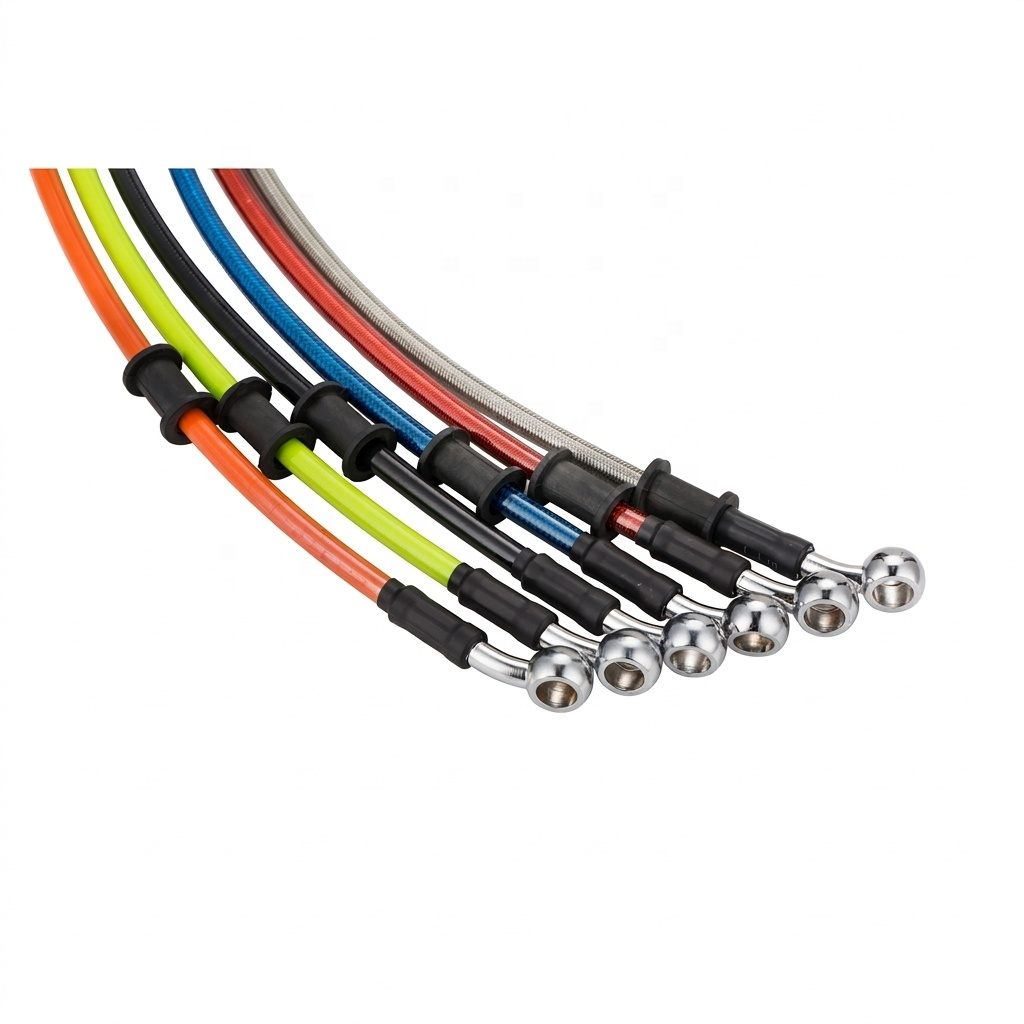
A custom brake hose represents a specialized component designed to meet specific performance requirements and aesthetic preferences in modern vehicles. Unlike stock brake hoses that come standard from manufacturers, a custom brake hose is tailored to individual specifications, offering improved durability, enhanced visual appeal, and optimized hydraulic performance. Understanding what constitutes a custom brake hose and how it operates within your braking system is essential for vehicle enthusiasts, performance builders, and anyone seeking to upgrade their braking infrastructure.
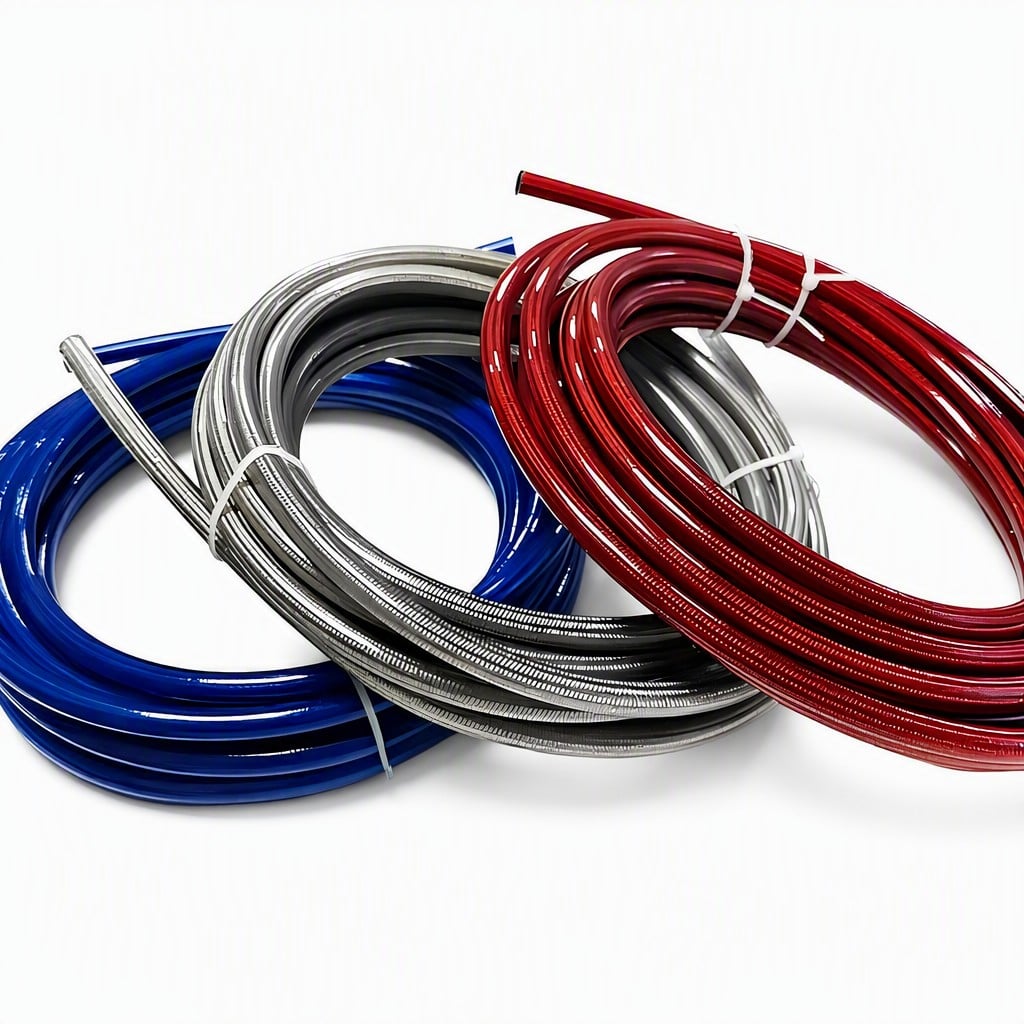
The primary function of any brake hose, including custom variants, is to safely transfer pressurized brake fluid from the master cylinder to the brake calipers or wheel cylinders. A custom brake hose achieves this through advanced materials, precision engineering, and adherence to stringent safety standards such as DOT brake hose specifications. This article explores the definition, mechanics, benefits, and practical applications of custom brake hoses in contemporary automotive design.
Understanding Custom Brake Hose Construction
Material Composition and Design
The construction of a custom brake hose typically involves multiple layers of specialized materials working in concert. The inner core consists of synthetic rubber or PTFE (polytetrafluoroethylene), chosen for its compatibility with brake fluid and resistance to degradation. Surrounding this core is reinforcement material, most commonly braided steel wire or Kevlar fiber, which provides structural integrity and pressure resistance. Braided brake lines, as they are commonly called, utilize this layered approach to withstand the extreme pressures generated during braking cycles while preventing expansion and failure.
The outer layer serves as protection against UV radiation, ozone, road salt, and abrasive contaminants that would otherwise compromise the hose's lifespan. For high-performance applications, manufacturers often select premium polymers and advanced reinforcement techniques. These design choices directly influence the hose's ability to handle pressure spikes, thermal cycling, and corrosive environments typical in modern vehicles.
Hydraulic Brake Tubing Fundamentals
At its core, hydraulic brake tubing works on Pascal's principle, which states that pressure applied to an incompressible fluid distributes evenly throughout the system. When you press the brake pedal, the master cylinder pressurizes brake fluid, and this pressure travels through the hydraulic brake tubing to activate brake calipers or wheel cylinders. The tubing must maintain absolute integrity to prevent pressure loss, which would result in reduced braking force or complete brake failure.
A custom brake hose integrates seamlessly into this hydraulic architecture, serving as a flexible conduit that accommodates suspension movement, engine vibration, and chassis flex while maintaining consistent pressure delivery. Unlike rigid metal tubing, which is used for fixed runs, brake hoses allow for routing flexibility and vibration damping, critical for vehicles with performance suspension systems or custom chassis modifications.
How Custom Brake Hoses Function
Pressure Transmission and Flow Dynamics
The operational sequence of a custom brake hose begins the moment the driver applies braking force. The master cylinder generates hydraulic pressure, typically ranging from 800 to 1200 PSI during normal braking, with potential peaks exceeding 1500 PSI during emergency stops. This pressure must travel instantaneously through the brake hose to the calipers, with minimal expansion or delay. The braided reinforcement in modern brake hoses minimizes expansion under pressure, ensuring responsive brake feel and consistent stopping power.
Temperature management plays a critical role in brake hose function. Friction during braking generates intense heat, and the brake fluid passing through the hose can reach temperatures exceeding 200 degrees Fahrenheit in aggressive driving scenarios. The material composition of a custom brake hose must resist this thermal stress without degrading, leaking, or becoming brittle. High-quality braided brake lines employ specialized inner core materials and advanced outer jackets that maintain integrity across this extreme temperature range.
Safety Standards and Compliance
DOT brake hose specifications establish minimum performance criteria that all brake hoses sold in the United States must meet. These specifications govern pressure ratings, temperature resistance, material composition, and failure modes. Custom brake hoses designed to meet or exceed DOT standards undergo rigorous testing, including burst pressure tests, temperature cycling, fluid compatibility verification, and abrasion resistance evaluation. When selecting a custom brake hose, confirming DOT certification ensures the component will perform reliably under real-world driving conditions.
Compliance with DOT brake hose specifications also involves labeling requirements, hose size designations (typically measured in dash sizes from 3 to 16), and connection port standards. These specifications ensure compatibility across different vehicle platforms and aftermarket brake systems, preventing installation errors that could compromise safety.
Benefits and Performance Advantages
Enhanced Durability and Longevity
Stock brake hoses deteriorate over time due to brake fluid absorption, temperature cycling, and environmental exposure. A custom brake hose constructed with premium materials resists these degradation mechanisms significantly better than standard hoses. Braided brake lines, for example, resist expansion under pressure better than unreinforced hoses, reducing stress on the hose material and extending service life. Many custom brake hoses offer replacement intervals of 50,000 to 100,000 miles or more, compared to stock hoses that may require replacement every 30,000 to 50,000 miles.
Improved Braking Response and Feel
One of the most noticeable benefits of upgrading to a custom brake hose is the immediate improvement in brake pedal feel. Because braided brake lines minimize hose expansion under pressure, less brake fluid is wasted in expanding the hose itself, resulting in a firmer, more responsive pedal. This translates to shorter stopping distances, greater confidence during aggressive driving, and more precise braking modulation. Performance drivers and professional racers widely report that upgrading to quality custom brake hose assemblies is one of the most cost-effective brake system improvements available.
The combination of improved pressure transmission, thermal stability, and reduced expansion makes custom brake hoses an essential upgrade for vehicles subjected to track use, towing, or performance driving where brake system reliability and consistency are paramount.
FAQ
What is the difference between a custom brake hose and standard OEM hoses?
Standard OEM hoses prioritize cost-effectiveness and basic performance, while custom brake hoses emphasize durability, performance, and aesthetic customization. Custom brake hose assemblies typically use braided reinforcement, premium inner core materials, and advanced outer jackets that resist thermal and environmental degradation more effectively. Many custom options also offer color choices and improved pressure retention, delivering noticeable improvements in brake response and longevity compared to factory-installed brake hoses.
Are custom brake hoses DOT brake hose specifications compliant?
Quality custom brake hose manufacturers ensure their products meet or exceed DOT brake hose specifications, which govern pressure ratings, temperature resistance, and material performance standards. Before purchasing, verify that the custom brake hose carries DOT certification labeling. This certification confirms the hose has undergone the required testing and meets federal safety standards. Reputable manufacturers clearly display DOT compliance information in product documentation and on the hose itself.
How often should a custom brake hose be replaced?
Custom brake hoses typically last significantly longer than stock hoses, often 50,000 to 100,000 miles or more depending on driving conditions, material quality, and vehicle type. Inspect brake hoses annually for signs of cracking, swelling, leaking, or discoloration. If you notice any deterioration, replace the hose immediately. Vehicles used in track racing, extreme towing, or severe climates may require more frequent inspection intervals, but premium custom brake hoses still outperform standard options in these demanding applications.
 EN