 EN

what-is-a-hydraulic-crimping-machine-and-its-core-function, what-is-a-hydraulic-crimping-machine-and-its-core-function, /news
EN
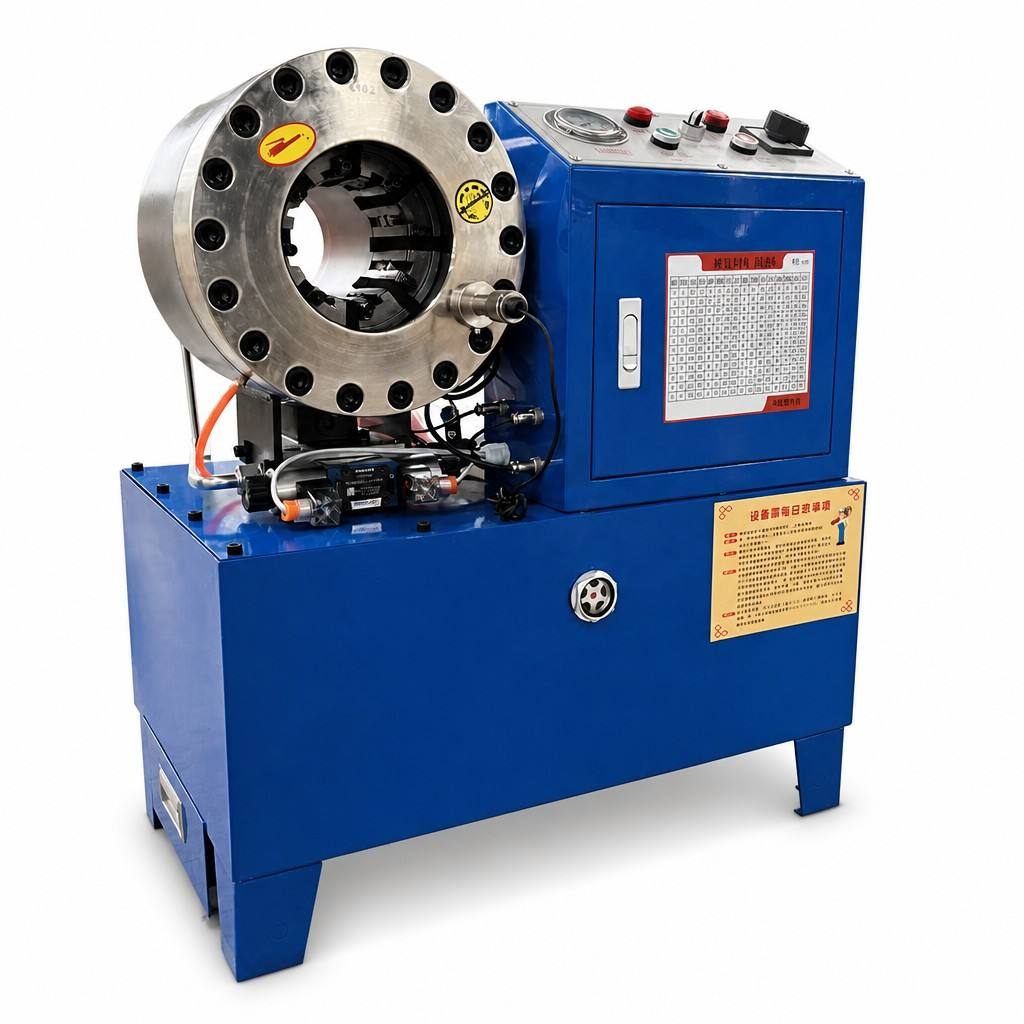
A hydraulic crimping machine is a specialized industrial tool designed to apply precise, uniform pressure for joining hose fittings, cable terminals, and connectors through permanent deformation. This equipment uses hydraulic force to compress metal sleeves or ferrules onto hose ends or wire strands, creating a mechanically locked joint that resists vibration, pressure fluctuations, and environmental stress. The hydraulic crimping machine operates as the backbone of assembly processes across manufacturing, construction, automotive, and fluid transfer industries where reliability and consistency are non-negotiable.
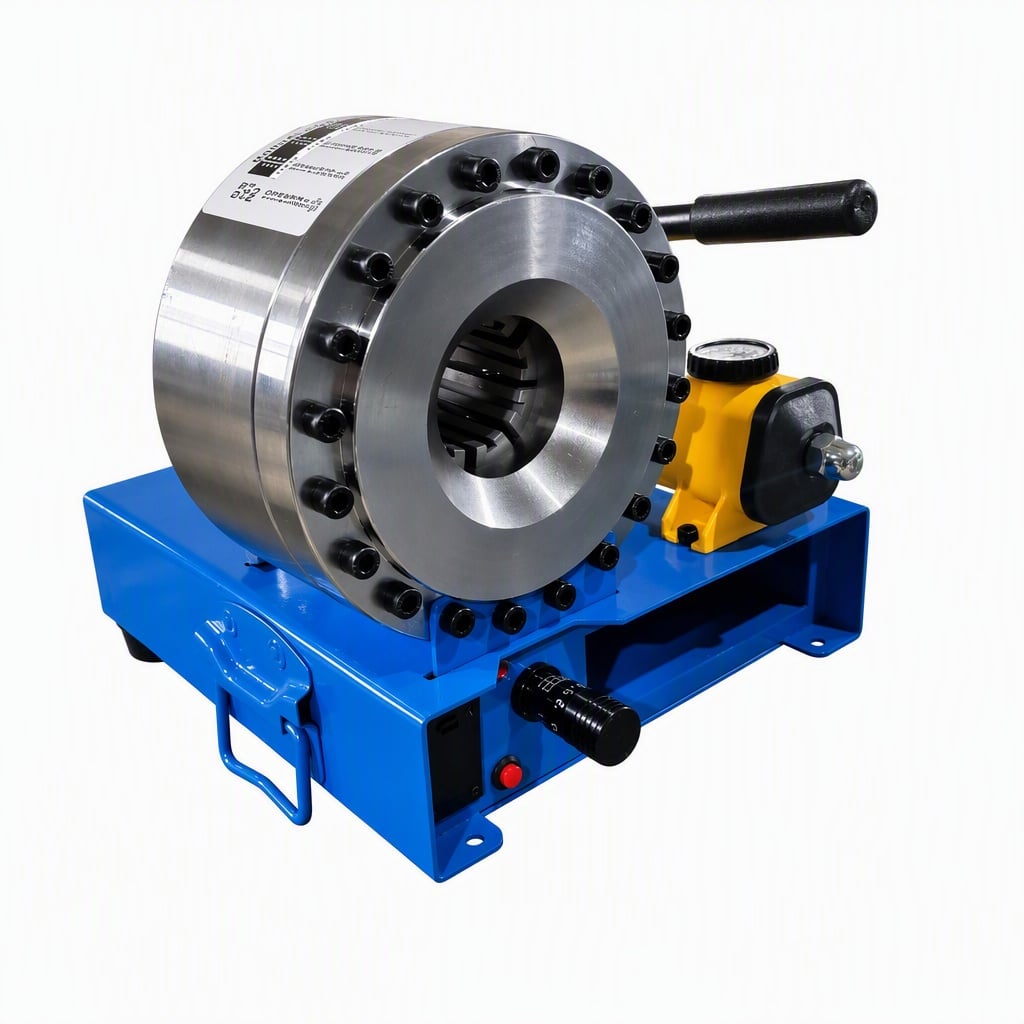
The core function of a hydraulic crimper tool extends beyond simple compression. It ensures dimensional accuracy, maintains joint integrity under extreme conditions, and eliminates human error through repeatable mechanical action. Whether you are working with hydraulic hoses, electrical connectors, or specialized cable assemblies, understanding how a crimping press equipment operates is essential for selecting the right tool and achieving production quality that meets industry standards and regulatory compliance requirements.
The hydraulic crimping machine functions through a closed hydraulic circuit that converts pump pressure into controlled linear or rotational force. When an operator initiates the cycle, hydraulic fluid pressurizes a piston or actuator, which then drives a crimping die down onto the workpiece with consistent force. This hydraulic crimper tool delivers pressure uniformly across the entire compression zone, ensuring that metal sleeves compress evenly without weak points, skewing, or incomplete seating. The precision of a hydraulic system eliminates variance that manual tools introduce, producing crimps that consistently meet specifications across thousands of cycles.
During operation, a hose fitting crimper or crimping press equipment positions the hose end and ferrule between the die cavity and the hydraulic ram. As pressure builds, the die reshapes the ferrule around the hose or cable, creating a permanent cold-weld bond. The hydraulic crimping machine applies force gradually and sustains it briefly, allowing material flow into the die profile without tearing or deforming the hose itself. This controlled compression contrasts sharply with impact-based methods, which risk damaging internal hose structure. The result is a joint that transmits both pressure and tensile loads reliably throughout its service life.
The primary core function of the hydraulic crimping machine is to produce joints that meet ISO, SAE, and industry-specific standards for burst pressure, pull-out resistance, and dimensional tolerance. A hose fitting crimper achieves this by applying predetermined force levels that compress the ferrule to exact diameter and concentricity specifications. Quality assurance in critical industries—such as aerospace, hydraulic systems, and high-pressure fluid delivery—depends entirely on the consistent output of a crimping press equipment. Without proper crimping, hoses fail prematurely under load, causing equipment shutdown, safety hazards, and costly downtime.
A hydraulic crimper tool accommodates various hose diameters and fitting configurations through interchangeable dies and jaw sets. This versatility allows a single crimping press equipment to process hoses ranging from 6 millimeters to 50 millimeters in diameter, as well as electrical terminals, battery connectors, and specialized cable assemblies. The modular design of modern hydraulic crimping machines reduces changeover time and inventory costs while maintaining the precision and repeatability that complex production schedules demand. Each die profile is engineered to match the ferrule geometry and the specific hose construction, ensuring the hydraulic crimper tool performs optimally across diverse applications.
The hydraulic crimping machine delivers superior consistency compared to manual or semi-automatic alternatives because its pressure, stroke length, and dwell time are electronically controlled or mechanically governed to precise tolerances. A hose fitting crimper powered by hydraulic systems eliminates operator fatigue and variability, ensuring every crimp meets specifications regardless of who operates the equipment or when production occurs. This reproducibility directly translates to lower scrap rates, fewer warranty claims, and enhanced customer confidence in assembled products. Industries processing high volumes of critical connections rely on a hydraulic crimper tool to maintain quality across millions of cycles without drift or calibration loss.
Hydraulic crimping machines are engineered for sustained industrial use. The robust steel frame, hardened dies, and sealed hydraulic systems resist wear and contamination far longer than pneumatic or mechanical alternatives. A quality crimping press equipment, when maintained according to manufacturer schedules, operates reliably for decades and handles continuous-duty applications without performance degradation. The hydraulic crimper tool's longevity makes it a cost-effective investment, spreading initial capital expense across years of productive service. Businesses deploying hydraulic crimping machines benefit from predictable operating costs, minimal unplanned maintenance, and stable production capacity.
Hydraulic crimping machines deliver consistent, repeatable force that manual tools cannot match, eliminating operator variability and producing uniform crimps every time. Unlike pneumatic crimpers, hydraulic systems provide smoother force application, lower noise, and superior control over pressure ramps and dwell times. A hose fitting crimper using hydraulic technology offers greater reliability in critical applications where joint failure creates safety or productivity risk. The hydraulic crimper tool is ideal for high-volume, precision-dependent processes where consistency across thousands of cycles is mandatory.
A hydraulic crimping machine protects the hose through carefully engineered die profiles that match the ferrule geometry precisely, ensuring compression force spreads evenly rather than pinching or tearing internal hose plies. The gradual force application of a hydraulic crimper tool, combined with controlled dwell time, allows the ferrule to conform smoothly to the hose without shock or stress concentration. Modern crimping press equipment incorporates load-sensing technology that monitors actual compression force and stops pressure buildup if resistance exceeds safe limits, preventing overload damage. This protection is critical when working with thin-walled or composite hoses that demand gentle handling.
Yes, most hydraulic crimping machines are designed with interchangeable dies, jaws, and locator bushings that adapt to various hose diameters and fitting configurations. A hose fitting crimper equipped with modular tooling can transition between applications in minutes, making it suitable for job-shop environments and facilities producing multiple products. The hydraulic crimper tool's flexibility, combined with the precision of a hydraulic system, enables businesses to maximize equipment utilization while maintaining the quality standards demanded by customers. Choosing a crimping press equipment with quick-change features significantly reduces setup time and expands production capacity across diverse applications.
