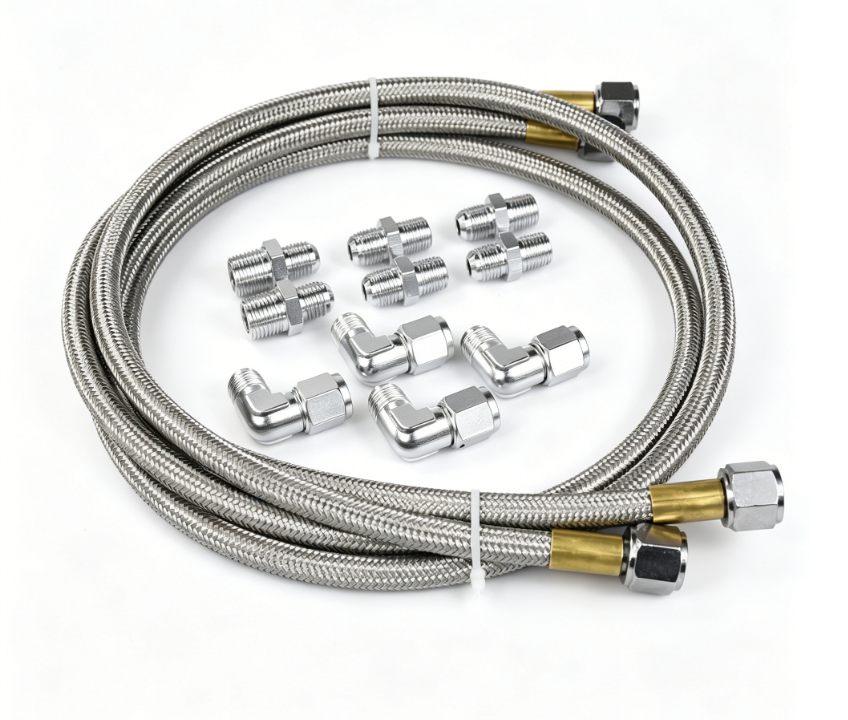
Understanding pressure ratings is critical when selecting the right braided hose for your application. Pressure ratings define the maximum operating pressure a hose can safely handle without failure, burst, or performance degradation. Every industrial fluid transfer system depends on hoses that can withstand the forces applied through pressurized liquids or gases. Selecting hoses with appropriate pressure ratings ensures system reliability, operator safety, and compliance with industry standards.
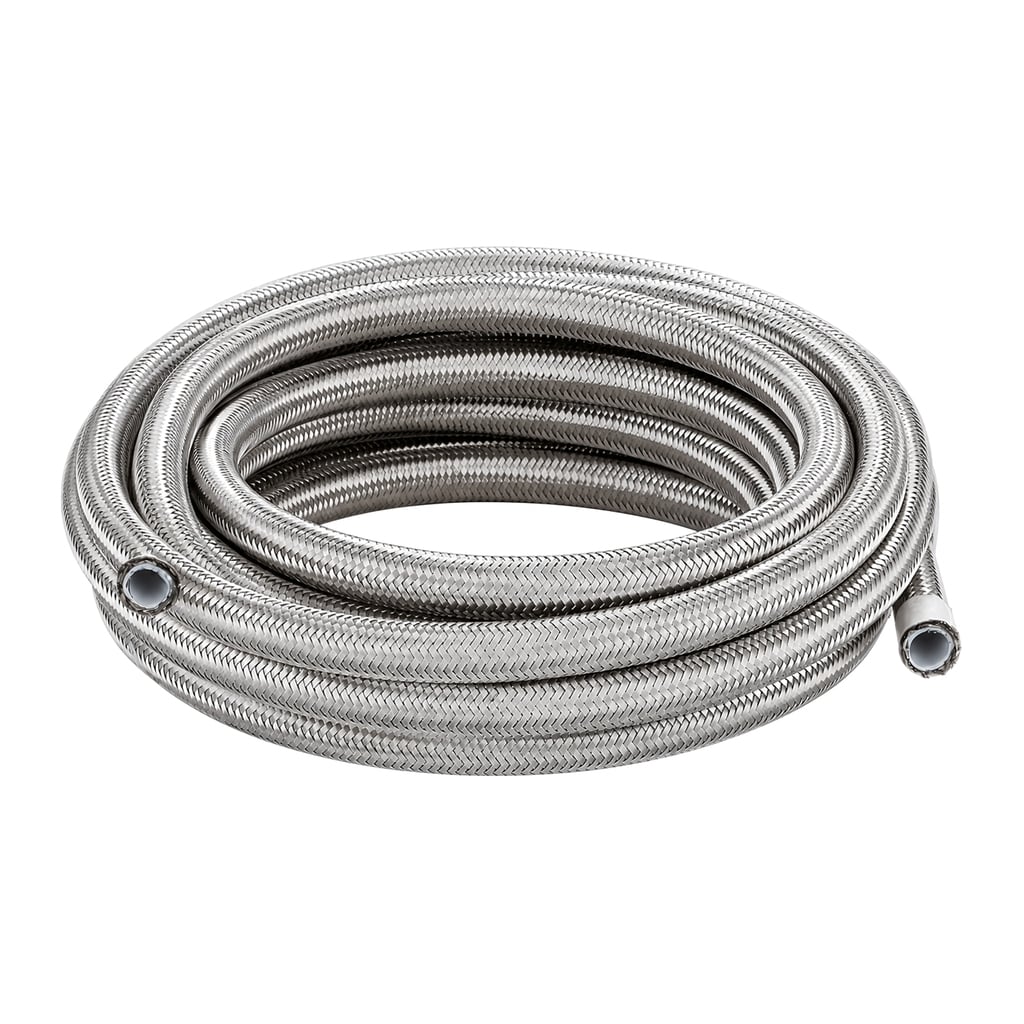
Pressure ratings vary significantly based on hose construction, material composition, and intended use. A braided hydraulic hose rated for 3000 PSI performs very differently from a garden hose rated at 150 PSI. Industrial applications—such as aircraft systems, heavy machinery, and racing vehicles—demand high-pressure hoses engineered with multiple protective layers and premium materials. This article explores how pressure ratings work, what factors influence them, and how to match the right hose type to your specific operational needs.
Pressure Rating Fundamentals for Braided Hose Systems
Understanding Working Pressure and Burst Pressure
Pressure ratings consist of two primary specifications: working pressure and burst pressure. Working pressure, often called nominal pressure or rated pressure, indicates the safe continuous operating limit under normal conditions. Burst pressure represents the maximum pressure at which the hose will fail catastrophically. Safety standards typically require burst pressure to be at least four times the working pressure, creating a safety margin that protects against sudden pressure spikes or material fatigue.
A braided brake hose rated at 260 PSI working pressure might have a burst pressure exceeding 1040 PSI. This ratio ensures that occasional pressure surges—such as when a driver applies emergency braking force—do not rupture the hose. Engineers design this safety factor into braided hose specifications to account for temperature fluctuations, material aging, and transient pressure events that occur during real-world operation.
Temperature Effects on Pressure Ratings
Temperature significantly impacts how much pressure a braided hose can safely support. Most pressure ratings are given at a standard temperature, typically 70°F (21°C). When fluid temperature rises, the hose material expands and becomes more flexible, reducing its structural rigidity and pressure-carrying capacity. Manufacturers often provide derating curves that show how working pressure decreases at elevated temperatures.
For a stainless steel braided hose, rated pressure may be reduced by 10–15% at 100°C and by 25–30% at 150°C, depending on the hose core material. In racing applications where engine bay temperatures exceed 120°C, operators must verify that the hose's derated pressure still exceeds the system's actual operating pressure. Ignoring temperature effects is a common cause of premature hose failure in high-performance vehicles and industrial heat-intensive environments.
Factors That Determine Braided Hose Pressure Ratings
Hose Core Material and Construction
The inner core material is the primary determinant of a braided hose's pressure rating. Rubber cores, typically synthetic or natural blends, support moderate pressures—usually 500 to 4000 PSI depending on formulation and wall thickness. PTFE (polytetrafluoroethylene) cores handle significantly higher pressures and offer superior resistance to aggressive fluids, chemical solvents, and temperature extremes. A braided hydraulic hose with a PTFE core often supports 5000 PSI or higher, making it suitable for precision industrial applications.
The number and tightness of the braided layers also affect pressure rating. Single-braid construction typically provides lower pressure ratings suitable for gravity-fed or low-pressure applications. Double-braid or spiral-braid configurations dramatically increase pressure capacity by distributing circumferential stress more evenly across the hose wall. High-pressure braided hoses found in racing and aerospace systems often feature four or more braided layers with carefully engineered braid angles to optimize burst resistance.
Hose Diameter and Wall Thickness
Hose inner diameter and wall thickness directly influence how much pressure the structure can withstand. Thinner walls reduce volume and weight but also reduce pressure capacity. Thicker walls increase structural strength but add bulk, weight, and cost. Engineers select wall thickness based on the required working pressure, the hose material, and space constraints in the target application.
A 1/4-inch braided hose will have a lower absolute pressure rating than a 1/2-inch braided hose made from identical materials, assuming both have proportional wall thickness. However, the specific pressure rating is always marked on the hose assembly itself, typically stamped or printed along with the SAE size designation. When specifying hoses, always match both the pressure rating and the diameter to ensure compatibility with system fittings and flow requirements.
Fitting Type and Connection Design
The fittings and connectors attached to a braided hose can limit its effective pressure rating. Crimped fittings, the most common type in industrial and automotive applications, must be properly manufactured and assembled to maintain full hose pressure rating. Loose or poorly crimped fittings create weak points that can fail before the hose core itself ruptures, rendering the high-pressure capability of the braided hose useless.
Reusable or push-connect fittings typically support lower pressures than crimped alternatives and may reduce the overall system pressure rating. For applications requiring stainless steel braided hose at maximum pressure capacity, crimped stainless steel fittings with proper assembly protocols ensure the hose and fitting perform as a unified, high-integrity component capable of delivering the rated performance consistently.
Common Pressure Ratings by Application
Automotive and Brake System Ratings
Automotive brake systems commonly use a braided brake hose rated between 200 and 280 PSI working pressure. These hoses must withstand the hydraulic force generated when brake pedal pressure is transmitted through the master cylinder to the wheel brake actuators. Braking creates rapid, repetitive pressure cycles, making fatigue resistance critical. DOT and SAE standards specify minimum pressure and safety requirements for braided brake hose assemblies used in vehicles sold in regulated markets.
Racing and performance vehicles often upgrade to braided brake hose kits with higher pressure ratings, sometimes reaching 500 PSI or more, combined with improved flow characteristics and reduced expansion under load. These upgrades provide stiffer brake pedal feel and more responsive stopping performance, particularly during hard cornering or extended track sessions where conventional hoses might experience pressure spikes or thermal stress.
Industrial Hydraulic System Ratings
Industrial braided hydraulic hose systems span a wide pressure range. Standard mobile hydraulics use hoses rated between 1500 and 3500 PSI for most excavators, wheel loaders, and compact equipment. Heavy industrial stationary systems may employ braided hydraulic hose rated at 3000 to 5000 PSI for precision machinery, injection molding presses, and material handling automation. Ultra-high-pressure aerospace and military applications demand braided hose rated at 5000 PSI and beyond, constructed with exotic materials and stringent quality control protocols.
The specific pressure rating chosen reflects the balance between performance requirements, equipment cost, hose durability, and system efficiency. Over-specifying pressure rating adds unnecessary cost and weight; under-specifying creates catastrophic failure risk and liability exposure. Industrial engineers consult equipment manuals and ISO 1219 hydraulic circuit design standards to select braided hose rated appropriately for each circuit section.
FAQ
What does 3000 PSI mean for a braided hydraulic hose?
A 3000 PSI rating indicates the maximum safe working pressure the braided hydraulic hose can continuously support under standard conditions (typically 70°F). This represents the pressure limit at which the hose is designed to operate reliably without degradation over thousands of pressure cycles. At 3000 PSI, the hose's structural design—including braiding layers, core material, and wall thickness—balances durability with practical application demands.
Can I use a higher pressure-rated braided hose than required?
Yes, using a higher pressure-rated braided hose is acceptable and often recommended for safety margins, though it may increase cost and hose stiffness. A braided brake hose rated at 500 PSI can safely be installed in a system designed for 260 PSI working pressure. However, excessive over-specification can reduce flexibility, complicate routing, or create compatibility issues with standard fittings or hose clamps designed for lower-pressure hose sizes.
How does a stainless steel braided hose improve pressure rating?
Stainless steel braiding replaces conventional nylon or polyester braid, offering superior tensile strength and resistance to abrasion and corrosion. The stainless steel mesh distributes hoop stress more effectively across the hose circumference, allowing engineers to reduce wall thickness while maintaining or exceeding the same pressure rating. Additionally, stainless steel braiding protects the underlying hose core from mechanical damage, environmental contamination, and UV degradation, extending hose service life and maintaining pressure integrity throughout its operational lifespan.
 EN