An intercooler is a critical component in any turbocharged engine cooling system, responsible for reducing the temperature of compressed air before it enters the combustion chamber. Understanding the correct pressure ratings that an intercooler must support is essential for reliable engine performance, longevity, and safety. Selecting an intercooler with inadequate pressure ratings can lead to system failures, reduced turbocharged engine cooling efficiency, and potential engine damage. This guide explores the critical pressure specifications every turbocharged vehicle owner and technician should know.
Turbocharged engine cooling depends entirely on intercooler reliability under pressure. Most modern turbocharged applications generate boost pressures ranging from 15 to 35 psi, with some high-performance engines exceeding 40 psi. An intercooler must safely handle these operating pressures while maintaining structural integrity and intercooler efficiency. The pressure rating of an intercooler is the maximum pressure it can withstand without rupture, deformation, or seal failure. This specification directly impacts how well the intercooler performs its cooling function and how long the system will last.
Understanding Intercooler Pressure Specifications
Standard Pressure Ratings for Turbocharged Systems
Most automotive intercoolers are designed to handle pressure ratings between 20 and 40 psi under normal operating conditions. Light to moderately turbocharged engines typically operate at 15 to 20 psi boost pressure, requiring an intercooler rated for at least 25 to 30 psi to provide a safe margin. Performance and racing applications may push boost levels to 35 psi or higher, demanding intercooler designs rated for 50 psi or more. The safety margin between operating pressure and the intercooler's rated pressure capacity is critical for preventing unexpected failures during peak boost events or if the turbocharger produces momentary spikes in pressure output.
Material and Construction Impact on Pressure Capacity
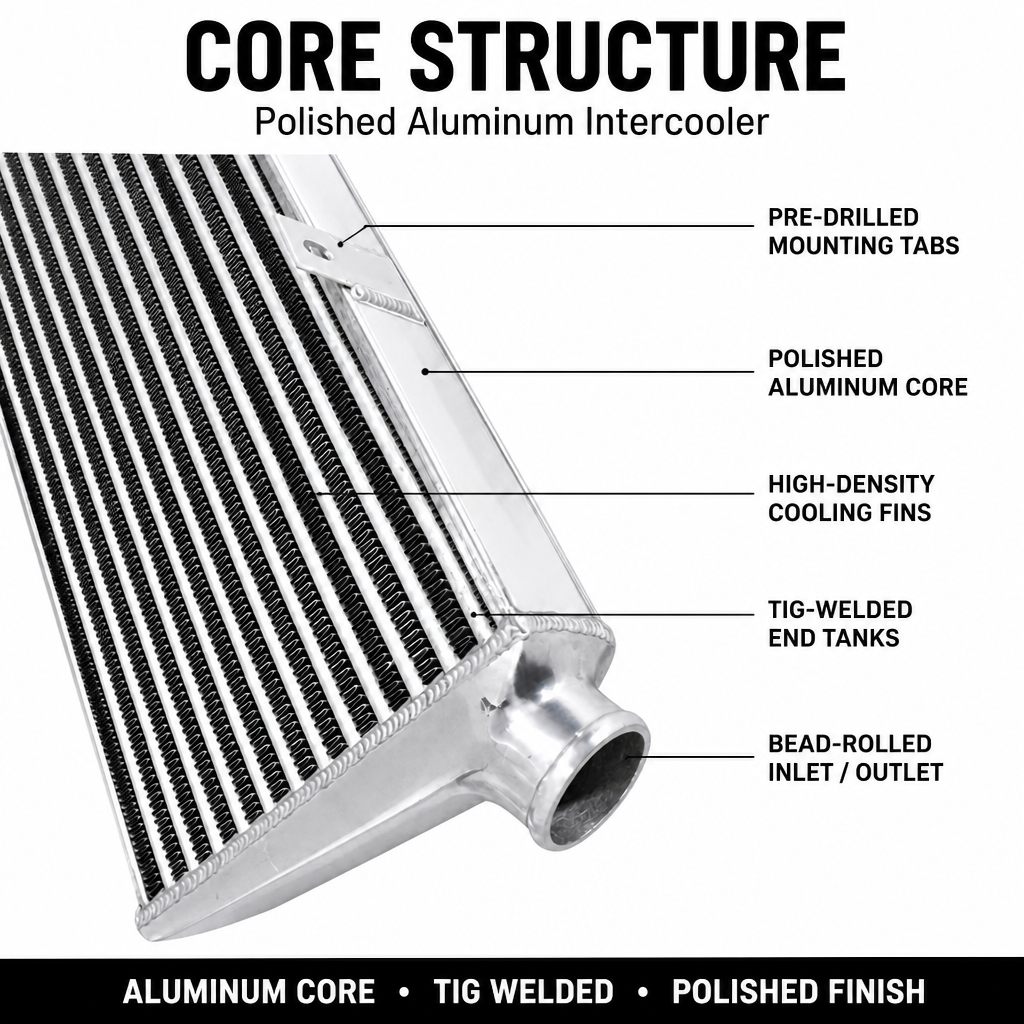
The material composition of an intercooler directly determines its pressure rating capabilities. Aluminum cores are the most common choice in modern intercoolers because they offer excellent turbocharged engine cooling performance combined with reasonable pressure handling. Cast aluminum intercooler tanks typically support 30 to 40 psi, while reinforced aluminum designs can exceed 50 psi. Plastic end tanks are cost-effective but have lower pressure tolerances, usually rated for 25 to 35 psi. Heavy-duty intercoolers with welded aluminum construction and thicker core materials can handle 60 psi or more, making them suitable for extreme performance applications. Proper intercooler maintenance involves regularly inspecting seams, welds, and tank connections for signs of stress or corrosion that could compromise pressure integrity.
Factors Affecting Intercooler Pressure Rating Requirements
Turbocharger Output and Engine Tune Adjustments
The turbocharger model and engine tuning directly dictate the pressure demands placed on your intercooler. Stock turbocharged engines typically operate within manufacturer specifications, usually 15 to 20 psi. Modified or tuned engines with ECU adjustments may increase boost output to 25 to 35 psi or higher, requiring an appropriately rated intercooler to handle the increased pressure without failure. Electronic boost controllers and custom tuning can create sudden pressure spikes, so selecting an intercooler with a pressure rating significantly above your target boost level is essential. Understanding your actual boost output and allowing adequate pressure safety margin ensures intercooler efficiency remains consistent and failure risk stays minimal.
Intercooler Maintenance and Pressure System Health
Regular intercooler maintenance is essential for maintaining design pressure ratings and preventing unexpected failures in your turbocharged engine cooling system. Over time, intercoolers accumulate carbon deposits, dirt, and oil residue that can restrict airflow and increase internal pressure stress. Cleaning the intercooler core annually or every 20,000 miles removes debris that reduces cooling performance and strains the structure under boost. Inspecting all hose connections, clamps, and fittings ensures no leaks develop that could allow pressurized air to escape, forcing the turbocharger to work harder and potentially exceeding safe pressure limits. Leaking intercooler connections also reduce intercooler efficiency, forcing the engine to run at higher temperatures than designed. Preventive intercooler maintenance protects your pressure rating investment and extends the lifespan of the entire turbocharged cooling system.
Selecting and Installing an Intercooler with Proper Pressure Rating
Choosing the Right Pressure Rating for Your Application
Selecting an intercooler requires careful consideration of your current and potential future boost levels. For stock or mildly modified vehicles, an intercooler rated for 30 to 35 psi provides comfortable margin above typical operating pressures. If you plan future engine modifications or ECU tuning, choose an intercooler rated 10 to 15 psi above your maximum anticipated boost pressure. Performance and racing builds should invest in heavy-duty intercoolers rated for 50 psi or more to handle boost spikes and aggressive driving conditions safely. Undersizing the pressure rating creates unnecessary risk, while oversizing adds cost and weight with minimal additional benefit. Consulting with your turbocharger manufacturer or engine tuner helps ensure your selected intercooler pressure rating aligns perfectly with your specific turbocharged engine cooling needs and intercooler efficiency requirements.
Installation Best Practices for Pressure Integrity
Proper installation ensures your intercooler maintains its rated pressure capacity throughout its service life. Use high-quality silicone hoses rated for at least the same pressure as your intercooler; standard rubber hoses may fail under sustained boost pressure. Secure all connections with stainless steel hose clamps tightened to recommended torque specifications to prevent leaks that compromise intercooler efficiency. Avoid kinking or crushing the intercooler core or connecting hoses, as deformation can weaken the structure and reduce pressure handling capability. Position the intercooler where it receives adequate airflow for optimal turbocharged engine cooling performance. After installation, pressure-test the complete system to verify all connections hold rated pressure without leaks before driving the vehicle. This verification step confirms intercooler maintenance standards are met and pressure integrity is intact.
FAQ
What happens if an intercooler pressure rating is too low for my turbo engine?
If your intercooler pressure rating is too low, the unit may rupture, crack, or develop seal failures when boost pressure exceeds its capacity. This can cause pressurized air to escape the system, reducing turbocharged engine cooling effectiveness and forcing your engine to run hotter than design specifications. A failed intercooler also allows oil and coolant to leak into boost pipes, contaminating the engine and potentially causing severe damage. Always select an intercooler rated significantly above your maximum boost pressure to ensure safe operation.
How often should I perform intercooler maintenance to protect its pressure rating?
Regular intercooler maintenance protects pressure integrity and cooling performance. Inspect your intercooler connections and hoses every 10,000 to 15,000 miles for signs of leaks, corrosion, or damage. Clean the intercooler core annually or every 20,000 miles using compressed air and appropriate solvents to remove carbon deposits and dirt that reduce intercooler efficiency. Check all clamps and fittings for tightness and replace any corroded or damaged components. Flushing the coolant side if you have a water-cooled intercooler every 30,000 miles prevents mineral buildup that weakens the structure and reduces pressure capacity.
Can I upgrade to a higher-pressure-rated intercooler on my existing turbocharged engine?
Yes, upgrading to a higher-pressure-rated intercooler is an excellent way to increase reliability and support future engine modifications. Heavy-duty intercoolers rated for 50 to 60 psi provide substantial margin above most stock turbocharged engine cooling requirements while enabling potential tuning upgrades without system changes. Ensure your new intercooler fits your vehicle's mounting location and plumbing, and verify that your hoses and connections support the new pressure rating. A higher-rated intercooler maintains superior intercooler efficiency under boost and adds long-term flexibility for performance enhancements.
 EN