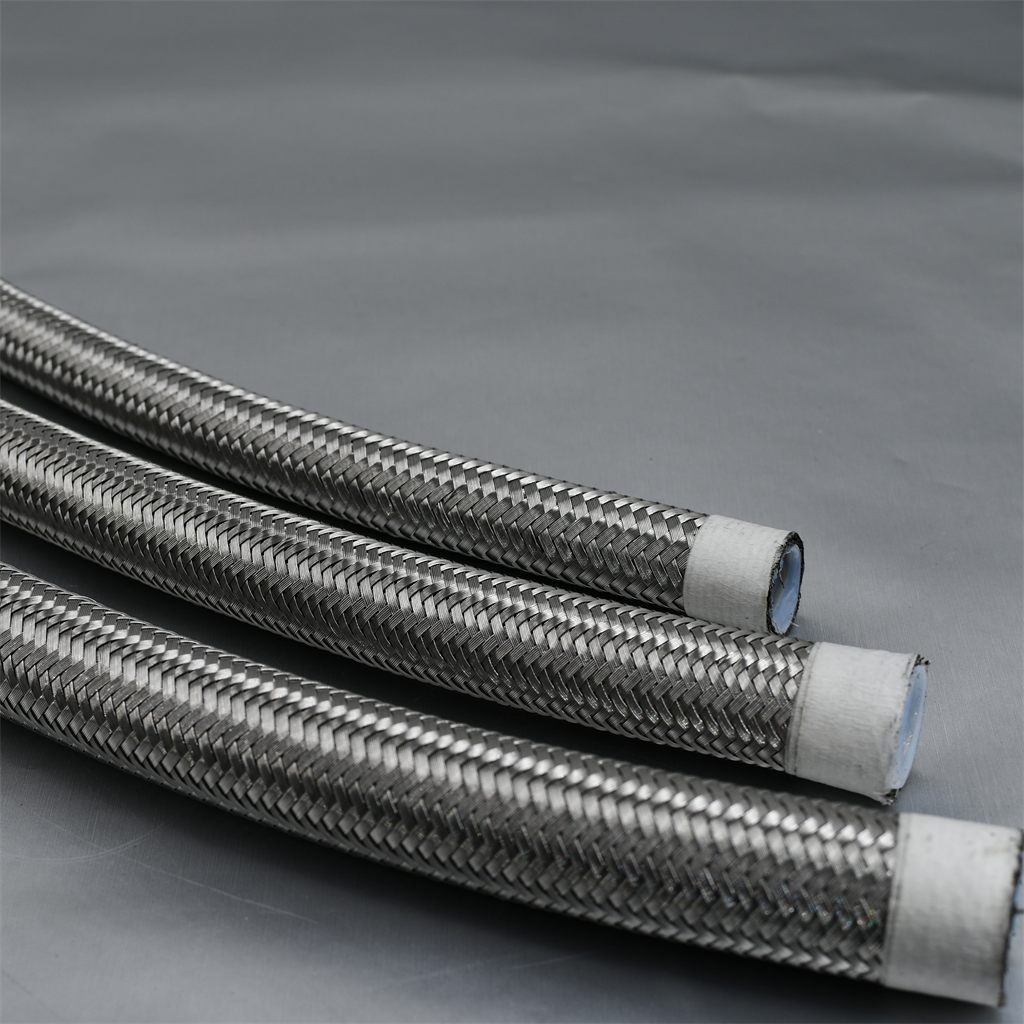
Teflon hose represents one of the most versatile solutions for extreme temperature applications in industrial systems. Understanding the precise temperature range that a teflon hose can withstand is critical for engineers, maintenance professionals, and procurement teams responsible for fluid transfer systems. Whether your operations involve cryogenic cooling, high-pressure fuel delivery, or chemical processing, the thermal performance characteristics of your hose selection directly impact system reliability, safety, and operational lifespan. Temperature tolerance is not merely a specification—it is a foundational design parameter that determines whether your system operates safely or faces catastrophic failure.
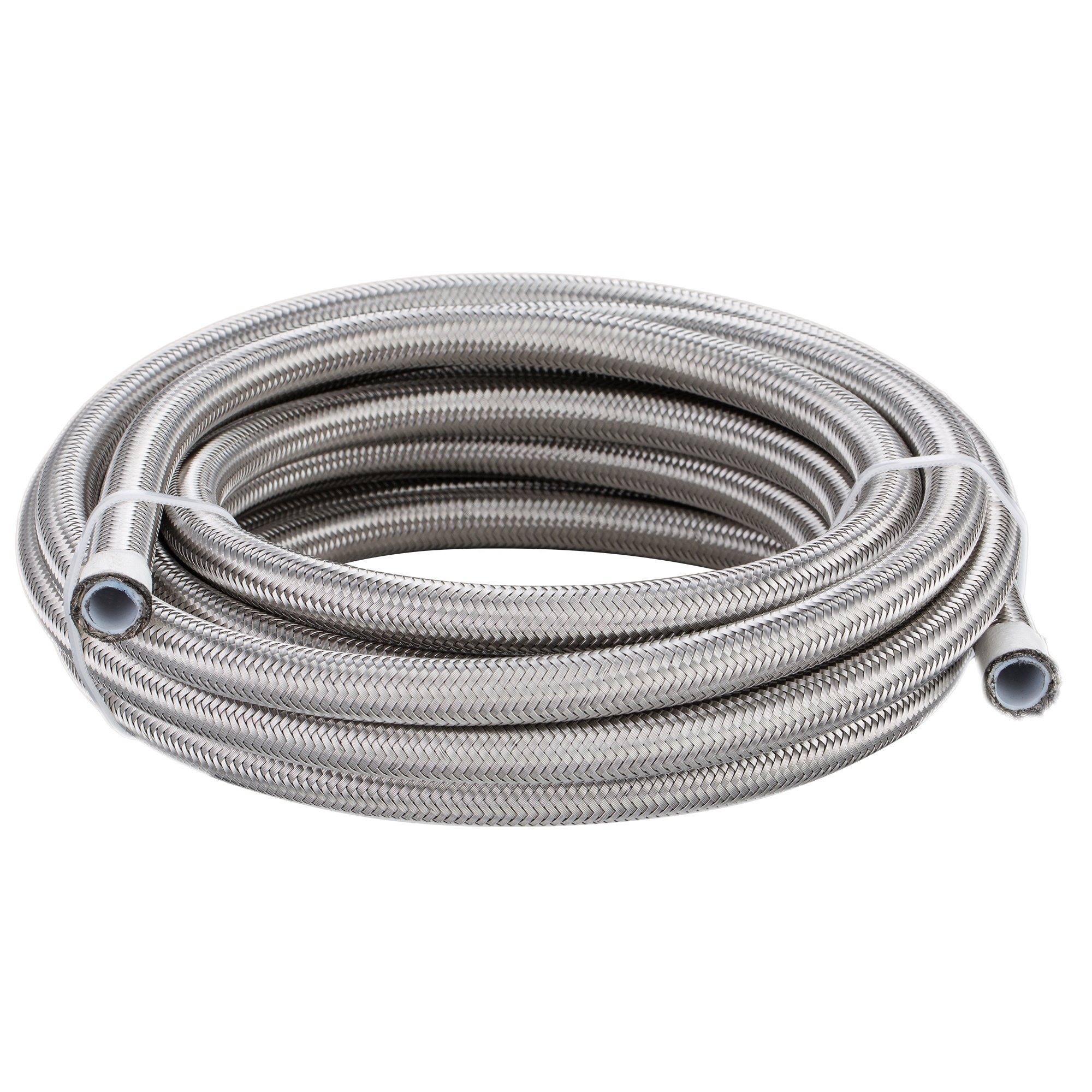
PTFE tubing, commonly known as Teflon hose, withstands continuous temperature ranges from approximately minus 65 degrees Celsius to plus 260 degrees Celsius, depending on hose construction, reinforcement materials, and end-fitting specifications. This exceptional range makes PTFE tubing the material of choice across aerospace, automotive, chemical processing, and pharmaceutical industries. Unlike standard rubber or thermoplastic hoses that degrade rapidly under extreme thermal stress, fluoropolymer hose maintains structural integrity and chemical resistance across this broad spectrum. The actual operating window varies based on application-specific factors including pressure cycles, fluid chemistry compatibility, and the presence of specialized reinforcement layers that enhance temperature performance boundaries.
Understanding Teflon Hose Temperature Specifications
Core Temperature Operating Range
The standard operating temperature range for PTFE tubing spans from minus 65 degrees Celsius to 260 degrees Celsius. This range represents continuous exposure limits under normal pressure and flow conditions. At the lower extreme, the fluoropolymer hose material remains flexible and maintains seal integrity without becoming brittle, a characteristic that distinguishes PTFE from conventional elastomers. At the upper boundary, the chemical resistant tubing retains its mechanical strength and does not experience the softening or degradation patterns observed in standard thermoplastic materials. Most industrial applications operate well within these boundaries, though some specialized high-performance installations approach or exceed these nominal limits through advanced engineering approaches.
Burst and Intermittent Temperature Peaks
Beyond continuous operating temperatures, PTFE tubing can tolerate brief thermal excursions to higher levels without permanent damage. The teflon hose material can endure intermittent exposure to temperatures approaching 300 degrees Celsius for short durations without rupture or loss of structural integrity. These thermal spikes typically occur during system startup, transient flow conditions, or emergency scenarios. However, repeated cycling to peak temperatures reduces the effective service life of the hose assembly. Engineers must distinguish between the steady-state operating envelope and the occasional spike tolerance when designing thermal management strategies for critical systems.
Factors Influencing Temperature Capacity of Chemical Resistant Tubing
Reinforcement Material Selection
The outer reinforcement layer significantly influences the maximum temperature capability of your PTFE tubing assembly. Hoses featuring aramid fiber braiding, stainless steel wire reinforcement, or composite wrap systems exhibit improved temperature stability compared to standard thermoplastic-reinforced variants. The reinforcement material must possess its own thermal tolerance equal to or exceeding the PTFE core temperature limit, otherwise the outer layer becomes the failure point. When selecting fluoropolymer hose for extreme applications, specifying the reinforcement composition is as important as confirming the PTFE core specification. Aramid-braided assemblies, for example, routinely support continuous operation at 260 degrees Celsius while maintaining pressure ratings, whereas some lower-cost reinforcement approaches show performance degradation above 200 degrees Celsius.
End Fittings and Assembly Configuration
The crimped or swaged end fittings on a teflon hose assembly often represent the thermal weak point in the overall system design. Metal ferrules and adapter bodies must match or exceed the temperature performance of the core tubing material. Stainless steel fittings are strongly recommended for applications exceeding 150 degrees Celsius, as they maintain dimensional stability and seal integrity across the full PTFE tubing operating range. Brass or plated steel fittings may develop microscopic cracks or seal degradation when subjected to continuous high-temperature cycling. The adhesive or sealing compound used during assembly must also withstand the target temperature range; incompatible adhesives can fail and compromise hose integrity even when the core materials perform correctly. Pressure-resistant connections rely on mechanical compression and material compatibility, making fitting selection crucial for chemical resistant tubing longevity.
Practical Application Scenarios and Real-World Performance
Cryogenic and Low-Temperature Systems
Teflon hose excels in cryogenic fluid transfer where temperatures drop to minus 50 degrees Celsius or lower. Liquid nitrogen and liquid helium systems routinely employ PTFE tubing because the material does not become brittle or lose elasticity at these extreme cold conditions. Standard rubber hoses freeze solid and crack within hours of cryogenic exposure, making fluoropolymer hose the only practical choice for these applications. The chemical resistant tubing also resists thermal shock—the rapid temperature swings occurring when warm gases flow through initially cold lines—that would damage conventional materials. Aerospace cryogenic systems, laboratory research equipment, and industrial gas processing operations depend on PTFE tubing's low-temperature reliability.
High-Temperature Fuel and Oil Systems
In automotive and industrial fuel delivery systems, engine compartment temperatures frequently exceed 100 degrees Celsius, with occasional peaks approaching 180 degrees Celsius during extended operation or thermal upset conditions. PTFE tubing rated to 260 degrees Celsius provides substantial safety margin above these operational demands, ensuring consistent performance across seasonal temperature variations and emergency transient conditions. Diesel engine fuel systems and high-power industrial turbines particularly benefit from the stable chemical resistance and temperature tolerance of teflon hose assemblies. The material compatibility with petroleum distillates, biodiesels, and synthetic oils further justifies the fluoropolymer hose selection for these demanding applications where standard hoses show swelling, degradation, or leakage after extended thermal cycling.
Chemical Processing and Thermal Cycling
Pharmaceutical manufacturing, semiconductor processing, and specialty chemical production frequently expose tubing systems to both elevated temperatures and aggressive chemical exposure simultaneously. PTFE tubing resists corrosion from strong acids, bases, and organic solvents while maintaining mechanical integrity across wide temperature ranges. Processes that require heating to 150 degrees Celsius, cooling to near ambient, then rapid reheating subject chemical resistant tubing to stress cycles that would fail conventional materials within days. The teflon hose material's inherent stability under these combined thermal and chemical stresses makes it the standard choice for these mission-critical applications. System downtime due to hose failure in chemical processing environments often triggers exponential costs through production delays and material loss, justifying the premium investment in superior PTFE tubing.
FAQ
What is the exact maximum continuous temperature for PTFE tubing?
The maximum continuous operating temperature for standard PTFE tubing is 260 degrees Celsius under normal pressure and chemical conditions. However, specific teflon hose assemblies with specialized reinforcement and fittings may have different ratings. Always verify the manufacturer's specification sheet for your particular hose configuration, as variations in construction, wall thickness, and fitting materials can alter the maximum safe temperature. Pressure rating and application-specific factors may further limit operating temperature below the theoretical maximum.
Can fluoropolymer hose handle brief temperature spikes above the rated range?
Yes, chemical resistant tubing including PTFE tubing can tolerate brief thermal excursions to approximately 300 degrees Celsius for short durations without permanent failure. However, repeated thermal cycling near these upper limits reduces hose service life and increases failure risk. System designs should avoid chronic operation at peak temperatures, as the cumulative thermal stress accelerates material fatigue and can compromise seal integrity over time. Emergency spikes are acceptable; sustained operation near thermal limits requires engineering review and potential hose replacement intervals.
How do reinforcement materials affect the temperature capacity of teflon hose?
Reinforcement materials such as aramid fiber, stainless steel wire, and composite wraps extend and stabilize the temperature performance of PTFE tubing assemblies. These outer layers must themselves withstand the target temperature range without degradation, otherwise the reinforcement becomes the limiting factor. Aramid-braided and stainless steel-reinforced teflon hose configurations maintain full temperature ratings to 260 degrees Celsius, while lower-cost reinforcement approaches may limit performance at higher end ranges. Selecting appropriate reinforcement is essential for achieving reliable operation in extreme temperature applications.
 EN