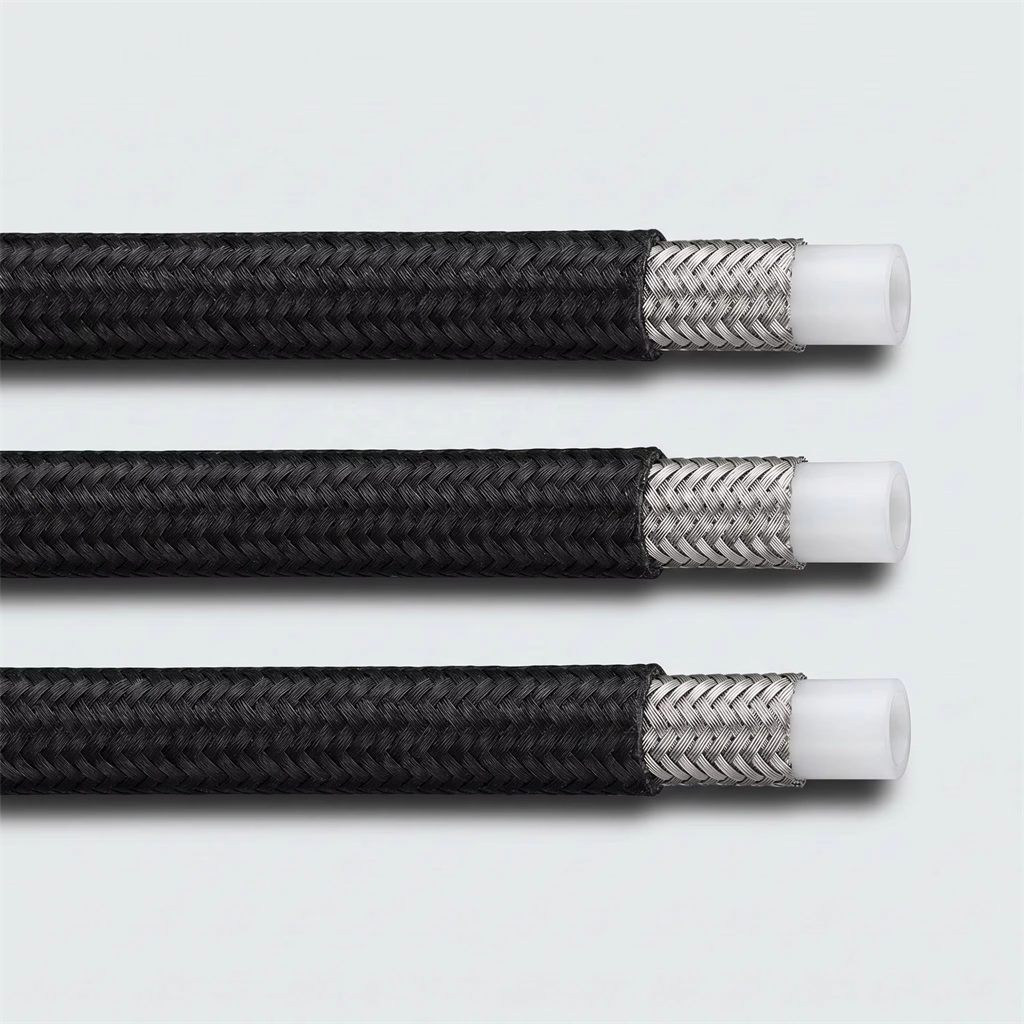
Corrosive fluids present one of the most demanding challenges in industrial fluid transfer systems. Whether you're handling aggressive chemicals, harsh solvents, or acidic compounds, selecting the right hose material determines operational safety, equipment longevity, and maintenance costs. A ptfe braided hose stands out as the superior choice for these demanding applications because it combines exceptional chemical resistance with reliable pressure containment and thermal stability.
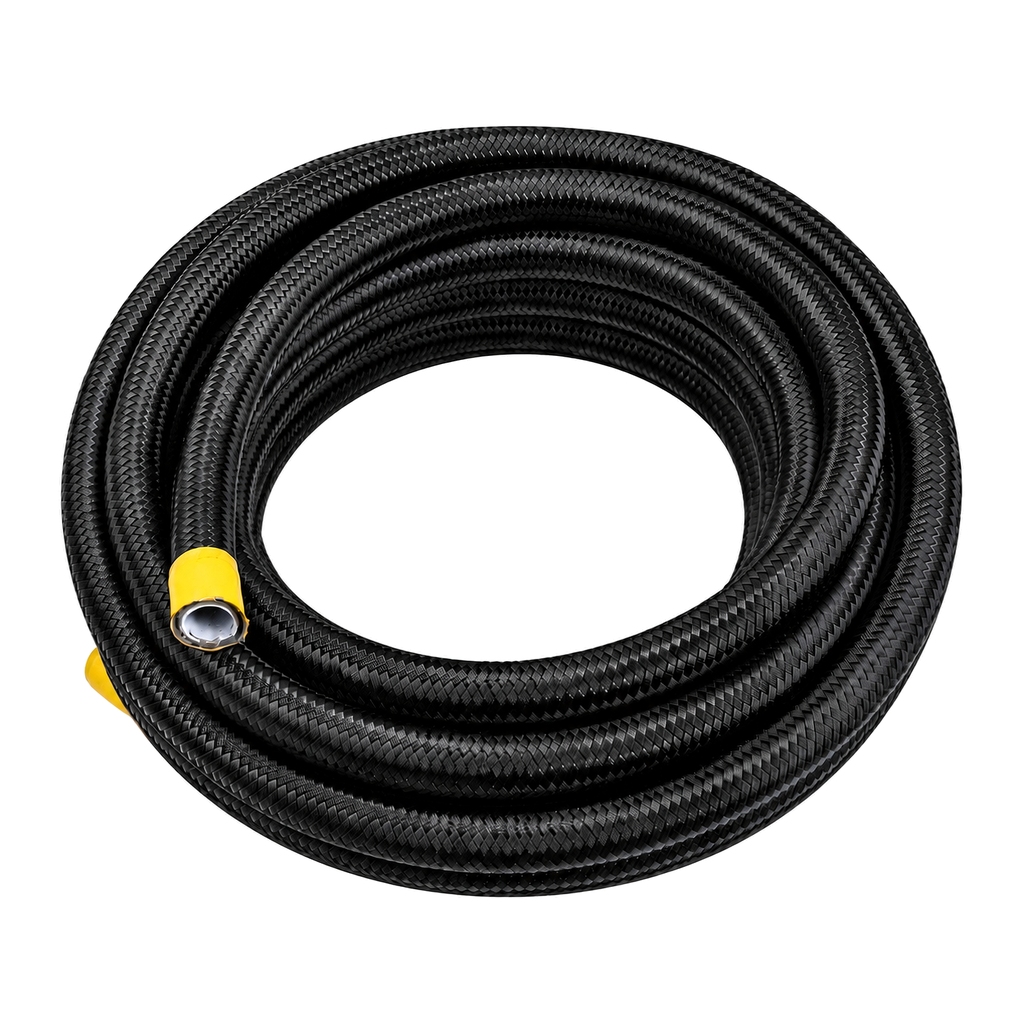
The need for specialized hose solutions in corrosive environments cannot be overstated. Standard rubber or synthetic polymer hoses degrade rapidly when exposed to aggressive chemicals, leading to frequent replacements, unexpected downtime, and safety hazards. A teflon braided tubing system eliminates these vulnerabilities by leveraging fluoropolymer chemistry that resists chemical attack while maintaining structural integrity under pressure and temperature fluctuations. Understanding why this material excels in these conditions helps operators make informed decisions that protect both equipment investment and personnel safety.
Superior Chemical Resistance and Material Properties
How Fluoropolymer Hose Assembly Handles Aggressive Chemicals
Fluoropolymer hose assembly materials contain fluorine atoms bonded strongly to carbon, creating one of the most chemically inert polymers available. This chemical structure means that aggressive acids, bases, oxidizing agents, and organic solvents cannot easily break down the polymer backbone. Unlike standard elastomers that swell, soften, or crack when exposed to corrosive substances, teflon braided tubing maintains dimensional stability and mechanical strength across extended contact periods. The nylon braid reinforcement adds structural support while the PTFE core provides the chemical barrier that traditional materials simply cannot match.
The resistance profile of a ptfe reinforced hose covers virtually all common industrial corrosives. Sulfuric acid, hydrochloric acid, chlorine gas, sodium hydroxide, acetone, and numerous other harsh chemicals that would destroy conventional hoses have minimal impact on PTFE. This broad compatibility eliminates the need for multiple hose types in facilities handling diverse chemical streams. The result is simplified inventory management, reduced qualification testing, and faster equipment deployment when chemical handling requirements change.
Temperature Performance and Long-Term Durability
Corrosive applications frequently involve elevated temperatures, which accelerates degradation in standard materials but has minimal effect on PTFE systems. A high-quality fluoropolymer hose assembly maintains its chemical resistance and mechanical properties across a working temperature range typically spanning minus 20 to plus 260 degrees Celsius, depending on specific construction. This thermal stability means that even when transferring hot corrosive liquids or operating in thermally demanding environments, the hose maintains pressure containment and resists chemical penetration. The nylon braid reinforcement complements the PTFE core by providing consistent pressure ratings across the full temperature spectrum without becoming brittle at low temperatures or losing strength at high temperatures.
Long-term durability in corrosive service directly translates to lower total cost of ownership. Because teflon braided tubing resists the chemical and thermal degradation that forces frequent hose replacement, facilities reduce maintenance labor, spare parts inventory, and unplanned downtime. The extended service life of PTFE reinforced hose systems makes the higher initial material cost a sound investment when lifecycle economics are properly calculated. Many operators find that switching to these systems pays for itself within the first or second service cycle through eliminated emergency replacements and reduced maintenance intervention.
Pressure Containment and Safety Considerations
Achieving Reliable Pressure Ratings with PTFE and Nylon Reinforcement
The nylon braid in a ptfe braided hose serves a critical structural function beyond mere reinforcement. Woven tightly around the PTFE core, the nylon fibers distribute internal pressure evenly across the hose cross-section, allowing the assembly to maintain high pressure ratings while remaining flexible and manageable for installation. Unlike rigid pipe systems, this construction allows technicians to route teflon braided tubing through confined spaces, around equipment obstacles, and into complex manifold configurations. The braid also prevents hose ballooning under pressure spikes, maintaining dimensional consistency that protects connected components and seals.
Safety in corrosive fluid transfer depends on consistent pressure containment. A ptfe reinforced hose eliminates the unpredictability of elastomeric materials that may lose pressure rating when saturated with harsh chemicals. Industrial regulations and best practices increasingly specify PTFE systems for critical corrosive transfer lines precisely because they deliver predictable, documented performance across extended service periods. The ability to certify that a hose will maintain full pressure rating even after prolonged chemical exposure provides the assurance that process safety systems require.
Compatibility with Existing Connection Systems
Integration with facility infrastructure remains a practical consideration when specifying a fluoropolymer hose assembly. PTFE braided hose systems are available with standard connection fittings including JIC, NPT, and SAE configurations that mate directly with existing pumps, manifolds, and equipment without requiring adapter redesign. The braided construction accommodates both crimp and compression fittings, providing flexibility in installation methods based on facility capabilities and maintenance protocols. This compatibility means operators can upgrade corrosive fluid transfer lines incrementally, replacing standard hoses with teflon braided tubing as they fail or require maintenance, without complete system redesign.
Practical Application and Performance in Industrial Settings
Common Corrosive Fluid Applications and Real-World Performance
Chemical manufacturing, semiconductor processing, laboratory operations, and pharmaceutical production all rely on ptfe braided hose systems for reliable corrosive fluid transfer. In these environments, process reliability directly impacts product quality and regulatory compliance. Semiconductor facilities use fluoropolymer hose assembly for delivering aggressive etchants and cleaning chemicals with zero contamination and consistent concentration. Pharmaceutical operations depend on teflon braided tubing to transfer corrosive catalysts and reagents while maintaining the chemical purity required for product safety. These applications demonstrate that PTFE systems perform across diverse industrial contexts where conventional materials would fail rapidly.
Performance data from extended field deployments confirms that a ptfe reinforced hose reduces hose-related failures by ninety to ninety-five percent compared to standard elastomeric alternatives in aggressive chemical service. This improvement directly reflects the superior chemical resistance and thermal stability that PTFE provides. Facilities that document hose failure rates typically find that switching to teflon braided tubing eliminates recurring failure modes, reduces emergency maintenance response times, and improves overall system reliability. The practical consequence is measurable improvement in production efficiency and personnel safety.
Installation, Maintenance, and Lifecycle Considerations
Proper installation of a ptfe braided hose ensures that design benefits translate into sustained field performance. Technicians must avoid sharp bends, mechanical abrasion, and routing near high-temperature surfaces that could damage the nylon braid without affecting the PTFE core. Most facilities establish routine inspection protocols that identify braid wear early, allowing planned replacement before pressure containment is compromised. A fluoropolymer hose assembly benefits from these preventive practices because the material durability means that properly installed systems typically reach or exceed manufacturer service life predictions without premature failure.
Maintenance intervals for teflon braided tubing are typically longer than for standard alternatives because the PTFE material does not degrade progressively in response to chemical exposure. Rather than following aggressive quarterly or semi-annual replacement schedules based on elastomer degradation estimates, facilities can extend inspection intervals to annual or biennial cycles. This reduced maintenance burden, combined with the extended service life of ptfe reinforced hose systems, generates substantial operational savings beyond the immediate chemical resistance advantage. The cumulative effect across large process systems can reduce annual maintenance costs by twenty to forty percent while simultaneously improving system reliability and safety performance.
FAQ
What makes PTFE more resistant to corrosive fluids than rubber hoses?
PTFE's fluorine-carbon bonding creates an extremely strong and stable molecular structure that resists chemical attack from virtually all corrosive substances. Rubber hoses, by contrast, can absorb, swell, and degrade when exposed to strong acids, bases, and solvents. The teflon braided tubing maintains chemical stability because the PTFE polymer does not interact with aggressive fluids the way elastomers do, preserving pressure containment and service life across extended periods.
Can a fluoropolymer hose assembly handle both high pressure and high temperature simultaneously?
Yes, a ptfe braided hose is engineered to maintain full pressure ratings across the full working temperature range, typically from minus 20 to plus 260 degrees Celsius. The nylon braid provides the structural reinforcement needed for pressure containment while the PTFE core resists thermal degradation at elevated temperatures. This dual performance makes ptfe reinforced hose ideal for processes that combine corrosive fluids with high pressure or elevated temperature conditions that would compromise standard materials.
Is the higher cost of PTFE braided tubing justified compared to standard hoses?
Lifecycle cost analysis almost always favors a ptfe braided hose when used in corrosive service. Though initial material cost is higher, the extended service life, reduced maintenance intervals, and elimination of emergency replacements typically deliver payback within one to two service cycles. Facilities that properly track failure rates and maintenance costs consistently find that switching to fluoropolymer hose assembly reduces total cost of ownership by twenty to forty percent while simultaneously improving safety and reliability performance.
 EN